


Which Bike to Choose for Commuting to Work + Practical Gear
Commuting to work by bike is a great way to stay active, save money on fuel, avoid the stress of parking, save time, and enjoy greater independence from traffic. The key to a successful commute is choosing the right two-wheeled companion. To make sure urban cycling remains enjoyable long after the first week, choose a bike that matches your route, commuting distance, and whether you”ll combine your ride with a train, bus, or car. Here”s how to choose the right one.
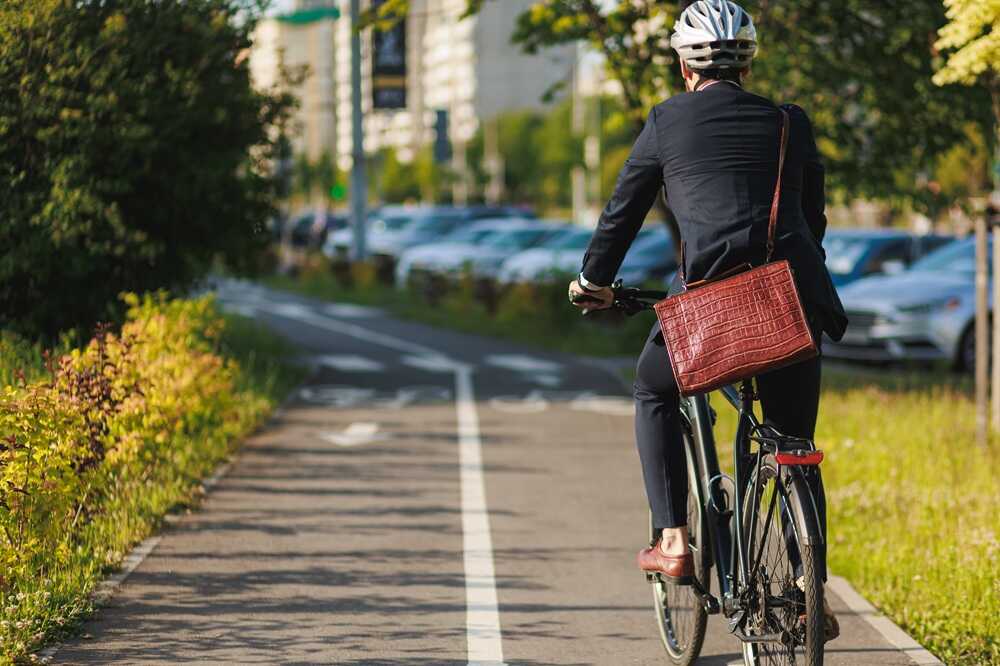
Start by planning your route
When choosing a bike for your daily commute, the most important factor isn”t the brand or the color—it”s your route. A bike suitable for a flat 3 km ride through the city centre is very different from one you”ll use for an 18 km commute over hills, broken asphalt, or gravel roads. Ask yourself the following questions:
- How many kilometres will I ride each way?
- Will I be riding on asphalt, cobblestones, gravel, or forest paths?
- Are there any hills on my route?
- Do I need to ride in business or smart casual clothing?
- Will I be carrying a laptop, groceries, or other items?
- Will I combine cycling with public transport?
- Do I want a bike only for commuting, or also for weekend rides?
Your answers will determine whether a city bike, gravel bike, or e-bike is the best fit.
How to choose the right commuter bike
City bikes: comfort for short and medium-distance commutes
City bikes are an excellent choice if you commute up to 5 km mainly through the city or on cycle paths and aren”t looking for a sporty riding experience. They offer a more upright riding position, better visibility in traffic, and often come equipped with practical accessories such as mudguards, a rear rack, lights, and a kickstand. Thanks to their low-step frame and easy mounting, they”re comfortable to ride in everyday clothes, including skirts, dresses, long coats, or business attire.


When choosing a city bike, focus primarily on comfort, the option to install a rear rack or basket, brake quality, and tyre width. Wider city tyres are better suited to handling drain covers, cobblestones, and uneven road surfaces.
Trekking and hybrid bikes: one bike for commuting and weekend adventures
Trekking and hybrid bikes are a great choice if you want one bike for commuting, weekend trips, and cycle paths. They”re faster than traditional city bikes while remaining more comfortable and practical than pure road-oriented models. They”re ideal for longer commutes of around 8–20 km, especially if your route combines asphalt, cycle paths, and rougher surfaces. Thanks to the ability to fit mudguards, racks, panniers, and lights, they easily become practical everyday commuter bikes.


Gravel bikes: fast commuting beyond smooth pavement
Gravel bikes are ideal for riders who want to commute quickly without worrying about rough asphalt, dirt roads, or gravel cycle paths. They make the most sense for regular commuting when your route is longer (over 15 km), more continuous, and you also plan to use the bike after work or on weekends. When choosing a gravel bike for commuting, look for wider tyres, mudguard compatibility, rack or pannier mounts, comfortable geometry, and gearing suitable for hillier routes.


An e-bike for commuting?
If your commute involves longer distances, steep hills, you”re not in peak fitness, have health limitations, or simply don”t want to arrive at work drenched in sweat, consider an e-bike. When choosing an e-bike for commuting, pay particular attention to:
- battery capacity relative to your commuting distance,
- convenient charging options at home or at work,
- motor type,
- bike weight,
- urban-friendly equipment (rear rack or pannier compatibility).
Otherwise, the same principles apply as with a conventional bicycle—for city riding, choose a city e-bike; if you”re looking for something sportier for longer rides, a gravel e-bike may be a better option.
What to look for in a commuter bike
- Comfortable riding position: For daily commuting, comfort is more important than racing aerodynamics. A slightly slower but more relaxed and predictable ride is often the better choice.
- Tyres: For city riding and regular commuting, avoid tyres that are unnecessarily narrow. Wider tyres absorb bumps better and cope more effectively with cobblestones, drain covers, and poor road surfaces.
- Brakes: Reliable brakes are essential for safe cycling. If you regularly ride in the rain, heavy traffic, or carry panniers, you”ll appreciate consistent braking performance and properly adjusted brakes.
- Gearing: Flat urban routes don”t require an extremely wide gear range. However, if your commute includes hills, longer distances, or carrying loads, gearing becomes much more important.
Mandatory cycling equipment and recommended extras
Your bicycle must be equipped with two independent, fully functional brakes and mandatory reflectors: a red rear reflector, a white front reflector, orange pedal reflectors, and side reflectors or reflective elements on the bike or clothing. In reduced visibility, you must also use a white front light and a red rear light. Helmets are legally required for riders under 18, but we recommend wearing one regardless of age, especially when commuting in traffic.


In addition to the mandatory equipment, mudguards and a bike bell are highly recommended for everyday commuting. Don”t forget about security either. If you leave your bike at train stations or outside office buildings, always secure it with a quality bike lock. It”s also a good idea to carry a spare inner tube or puncture repair kit along with a mini pump.
Panniers or a backpack?
Rear racks with a pannier, basket, or bag are almost always worth having—they easily carry your lunch or groceries on the way home. For shorter commutes, a backpack is usually sufficient, but if you regularly transport a laptop and spare clothes over longer distances, you”ll be more comfortable with a rear rack and waterproof cycling panniers (for example, Sport Arsenal or Thule). This reduces strain on your back, minimises sweating, and lowers the bike”s centre of gravity for improved stability.
Combine cycling with public transport
Not every commute can be completed entirely by bike. Sometimes the most practical solution is to combine cycling with trains, metro systems, or buses. In this case, the weight of the bike becomes especially important. While a lightweight gravel or fitness bike is easy to carry up station stairs, a heavy e-bike may be much less convenient.
You can ride to the train station and continue on foot after arrival, or take your bike on the train and cycle the final kilometres. If you regularly travel by tram, metro, trolleybus, or city bus, consider a folding e-bike or folding bicycle, which takes up much less space on crowded public transport.
The best commuter bike is the one you”ll actually ride
The best commuter bike is the one that matches your route, commuting distance, fitness level, parking options, and the way you want to travel to work. Whatever type you choose, don”t overlook the accessories—they often make the difference between cycling becoming a pleasant daily habit or just a short-lived experiment.
More articles


How to tell when it’s time for a major bike service
A bike rarely starts playing up overnight; it usually gives you gradual warning signs. First, you’ll notice a slightly noisier chain or that shifting gears uphill is more difficult. Then you’ll notice the chain skipping when pedalling, squeaking brakes, or the bike wobbling uncomfortably at higher speeds. If you spot these signs in good time, you can identify the problem before it turns into a nasty breakdown whilst you’re out on a ride. Find out what signs to look out for whilst riding and when to take your bike to a service centre to be looked after by experienced mechanics.


