


Bicycle lights with radar: Greater visibility and safety on the road
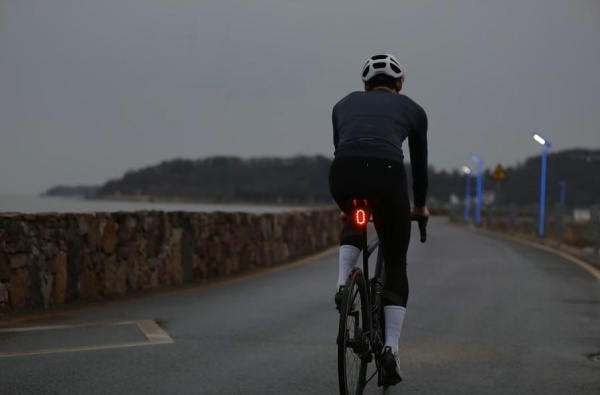
Rear lights with integrated radar combine two key safety functions: they increase the cyclist”s visibility while simultaneously actively monitoring the area behind the bike. As soon as a vehicle approaches from behind, the cycling radar immediately alerts the rider – whether via a compatible bike computer, smartphone, watch, or directly through visual or audible signals. This gives the cyclist valuable time to react without having to constantly look over their shoulder.
Important:
A cycling radar does not function as a full-fledged rear-view mirror and does not replace visual checks, compliance with traffic regulations, or caution. However, it is an extremely practical aid when riding on busy roads, narrow roads, or in poor visibility.
How Does a Cycling Radar Work?
A radar bike light emits millimeter-wave radio signals behind the rider, which are reflected by moving objects (cars, motorcycles, or trucks). The integrated device continuously evaluates the measured data to determine:
- the distance of the approaching vehicle,
- its relative approach speed,
- the number of objects approaching at the same time.
The information is most commonly transmitted via ANT+ Radar or Bluetooth wireless protocols. A side bar appears on the bike computer or smartphone display, with dots representing vehicles moving toward the cyclist icon. Color coding (e.g. orange/red) also indicates how quickly a vehicle is approaching.
If you use a radar light without a display or smartphone, the device still works, but the warning options are limited – for example, the light may change its flashing frequency or emit an audible signal.
What Can the Radar Detect and What Can Affect It?
By design, the radar is intended to detect objects approaching at a higher speed.
- What it does not detect or may not detect reliably: Objects traveling at the same speed as you, vehicles moving away, pedestrians, or slow cyclists.
- What affects accuracy: Uneven terrain, sharp bends, parked cars along the road, heavy rain, or incorrect light alignment.
Installation tip: For the radar to work correctly, it must be mounted at the correct height and in an approximately horizontal position, pointing directly backward. The light must not be obstructed by a saddle bag, long jacket, or mudguard.
Comparison of Selected Radar Lights
| Model | Radar Range | Battery Life | Weight | Light Output / Visibility | Connectivity & Durability |
|---|---|---|---|---|---|
| iGPSPORT SR Mini | up to 160 m (up to 8 vehicles) | 6–20 hours | 50 g | 30 lm (visibility up to 1.2 km, 220° angle) | BLE, ANT+, USB-C, IPX7 |
| Garmin Varia RTL515 | up to 140 m | 6 h (steady) / up to 16 h (day flash) | 71 g | up to 65 lm (day flash, multiple modes) | ANT+, Bluetooth, IPX7 |
| Magene L508 | up to 140 m (up to 8 vehicles) | 4–19 hours (depending on mode) | 65 g | 6–40 lm (220° visibility angle) | ANT+, Bluetooth, USB-C, IPX7 |
| Lezyne Radar Drive Rear | up to 150 m | 6 h (steady) / up to 20 h (day flash) | 144 g | up to 300 lm | BLE, ANT+, IPX7 |
*Note: Actual battery life depends on the selected lighting mode, ambient temperature, and frequency of vehicle detection.
Detailed Review of the Compared Models
1. iGPSPORT SR Mini – The Lightest Option with the Longest Range
iGPSPORT SR Mini (SR30 Mini) stands out with its extremely compact dimensions and a weight of just 50 grams. The manufacturer claims vehicle detection at distances of up to 160 meters (at relative speeds of 4 to 110 km/h) and the ability to track up to 8 objects simultaneously. It offers a wide detection angle (45° horizontally, 35° vertically) and battery life of up to 20 hours.
Who is it for: Cyclists and road riders who care about every gram, require long battery life, and are looking for an affordable radar with a wide detection angle.
2. Garmin Varia RTL515 – The Gold Standard and a Proven Classic
Garmin Varia RTL515 is the benchmark for the entire cycling radar category. It offers a range of 140 meters and outstanding detection algorithm reliability with minimal false alerts. Its main advantage is seamless integration with the Garmin ecosystem (Edge bike computers, watches), but it also works very well with smartphones via the Varia app.
Who is it for: Garmin device owners and riders who prioritize maximum detection reliability and a proven ecosystem.
3. Magene L508 – Excellent Versatility and Value for Money
Magene L508 offers a range of 140 meters, tracks up to 8 vehicles, and provides a wide 40° horizontal detection angle. It stands out with its range of lighting modes (including a group riding mode that does not dazzle riders behind you), a built-in accelerometer for the brake light function, and customizable flashing patterns via the mobile app. Modern USB-C charging is also included.
Who is it for: Cyclists looking for an affordable, versatile radar with extensive lighting mode options and a brake light function.
4. Lezyne Radar Drive Rear – Exceptional Light Output
Lezyne Radar Drive Rear stands out with a maximum light output of up to 300 lumens, ensuring excellent visibility even in bright daylight. The radar has a range of 150 meters. The trade-off for its high light output and robust construction is a higher weight of 144 grams, which is almost three times that of the iGPSPORT.
Who is it for: Riders whose priority is maximum long-distance visibility even in bright daylight and who do not mind a more robust design.
Which Bike Radar Should You Choose?
- Lightest and most compact option: iGPSPORT SR Mini
- Most reliable detection and best ecosystem: Garmin Varia RTL515
- Best value for money and range of modes: Magene L508
- Highest light output for daytime use: Lezyne Radar Drive Rear
Frequently Asked Questions (FAQ)
Do Cycling Radars Work with Aero Seatposts?
Yes, most modern radar rear lights come with rubber straps and adapters designed for both traditional round and profiled aero seatposts. However, with significantly flattened teardrop-shaped profiles, it is a good idea to check the shape of the included rubber adapter beforehand.
How Does the Radar Work When Riding in a Group (Peloton)?
If you are riding closely behind another cyclist, the radar will detect vehicles once they enter its field of view. Models such as the Magene L508 or Garmin Varia RTL515 also offer a special Peloton mode, which reduces the flashing intensity so that the light does not dazzle the rider directly behind you.
How Compatible Are Cycling Radars Across Different Brands?
Thanks to the universal ANT+ Radar wireless standard, you can freely mix and match radars and bike computers from different brands. Magene, Lezyne, or iGPSPORT radars can be paired with Garmin Edge, Wahoo ELEMNT, or Bryton bike computers without any issues – and Garmin radars likewise work with bike computers from other brands.
What Happens If I Don”t Use a Bike Computer?
All of the compared radars can be connected to a smartphone mounted on the handlebars (via mobile apps such as Garmin Varia App, Magene Utility, or iGPSPORT). The phone then provides audible alerts and displays approaching vehicles directly on its screen.
Conclusion
Although a radar rear light does not provide a direct image like a rear-view mirror, it reliably alerts you to vehicles approaching from behind and helps you better assess the traffic situation. Combined with a highly visible flashing rear light, it significantly improves both situational awareness and the cyclist”s passive safety. When choosing a model, consider not only its maximum range in meters, but also compatibility with your equipment, real-world battery life, and the overall weight of the device.
Best-selling products


