


Mahle vs. Bosch: Which motor is better for a gravel e-bike?
Mahle X20 / X35 – lightness, subtlety, and a natural ride feel
The Mahle drive system is among the lightest systems on the market. The motor is integrated directly into the rear hub, which means the entire system weighs just a few kilograms and doesn’t change the frame shape at all. At first glance, a gravel bike with this motor looks like a classic bike without a battery. Mahle offers what’s known as a “light-assist” character—the support is gentle, quiet, and smooth. Rather than a strong pull uphill, you feel a light tailwind that helps you keep pace or save energy in a headwind. Above 25 km/h, the motor adds virtually no resistance, so the bike rides just like a standard gravel bike.
The integrated battery (typically 250–320 Wh) is enough for long спортивy rides. If you want more range, you can add a range extender—an external battery that mounts in place of a bottle cage.
Mahle is ideal for performance-oriented cyclists who want to keep the feel of a traditional bike but appreciate a bit of help on climbs or in headwinds. It’s an elegant solution for fast riding, fitness training, and long rides pushing up to 150 km.
Bosch Performance Line SX – power, dynamics, and control
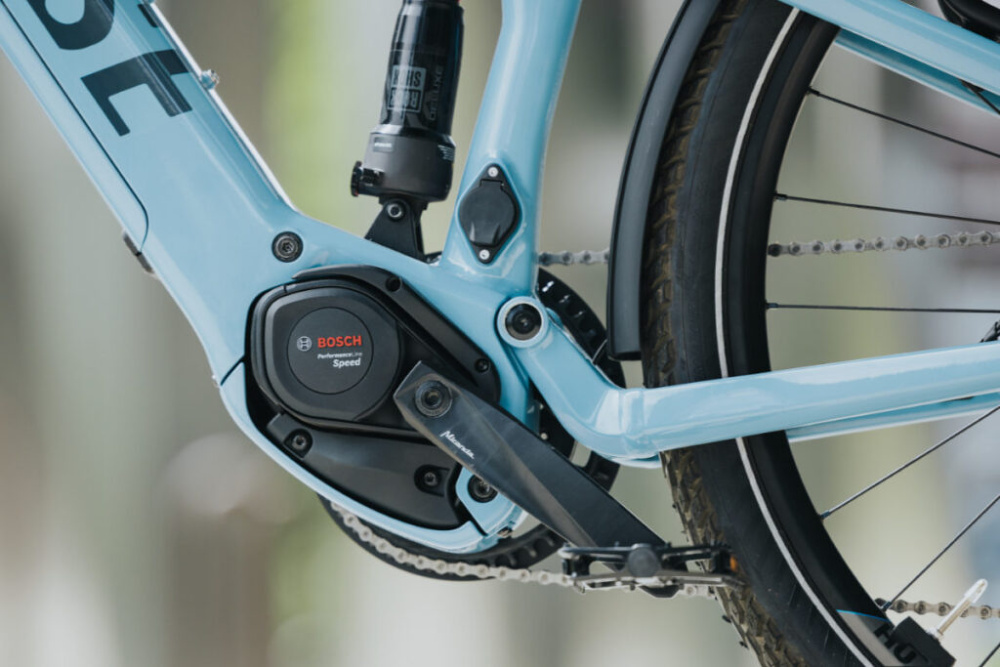
By contrast, the Bosch Performance Line SX represents a different philosophy. The motor is positioned at the bottom bracket and uses pedaling power through the drivetrain—meaning it can deliver a much higher torque (up to 55 Nm) and peak output up to 600 W. On climbs or when riding with bags, the difference is immediately noticeable. Bosch responds to cadence and pedal pressure and smoothly meters power according to your riding style. The result feels natural, but it has a much more forceful character than Mahle—especially at lower speeds and during acceleration. Thanks to a lighter design compared to older Bosch models, the system stays compact while still adding a serious “kick” to the ride.
Paired with a Bosch PowerTube battery with a capacity of around 400 Wh, you get solid range even under higher load. Bosch Performance Line SX is aimed at riders who aren’t afraid of climbs, plan longer trips with luggage, or simply want a powerful e-gravel bike with confidence in any terrain.
Although a bike with this motor is slightly heavier than one with Mahle, the reward is a truly versatile machine that can handle even mountainous elevation gain.
What’s new for 2026 in gravel e-bikes
The year 2026 will bring several major technological innovations to the world of gravel and road e-bikes.
Manufacturers are focusing on combining higher performance, longer range, and lower weight, opening the door to new e-gravel models with output comparable to lightweight e-MTBs.
Bosch Performance Line PX
Bosch is expanding its lineup with the all-new Performance Line PX motor, building on the success of the SX model. It will offer higher torque and better efficiency when pedaling at high cadence, making it ideal for gravel and road e-bikes.
Another new feature is an improved 540 Wh PowerTube battery with a new “Battery Lock” system and the option to integrate with navigation and eShift functions. These innovations will appear on premium brands during the 2026 season and soon also in the range of e-bikes powered by Bosch.
Mahle M40 – a new generation of lightweight power
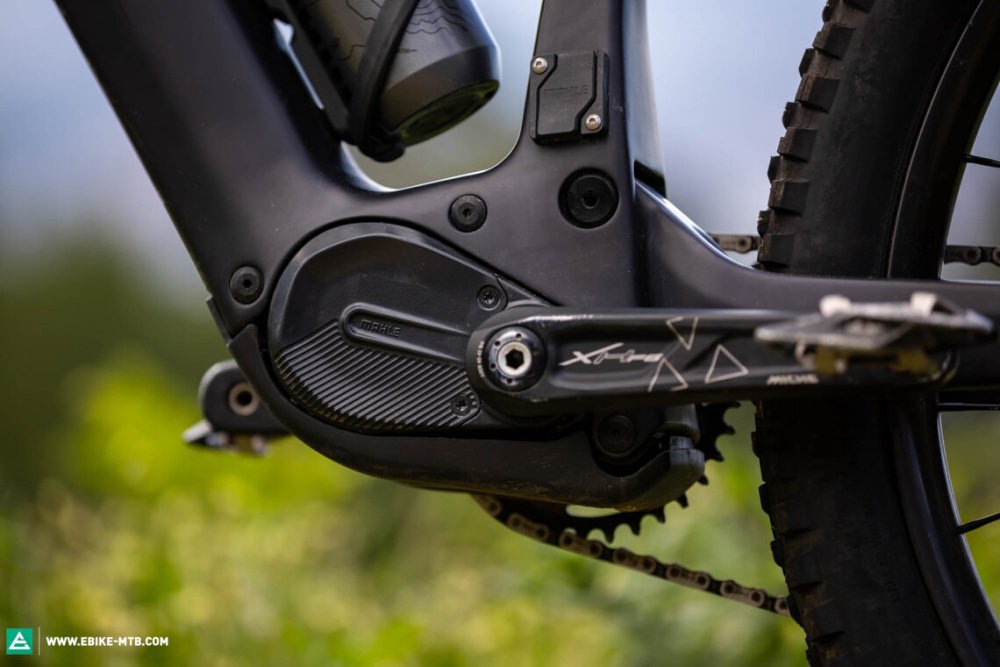
Mahle has introduced the new mid-drive M40 motor, complementing the current X20 and X35 ranges. Compared to them, it offers higher performance (up to 850 W peak) and 105 Nm of torque, while remaining compact and lightweight. It is designed to provide stronger assistance even at low cadence, which gravel and road cyclists will appreciate on longer climbs.
Mahle has also improved the efficiency and responsiveness of the lightest X20 system—now with 65 Nm of torque, 275 W peak power, and full compatibility with UDH.
These changes show that 2026 will be a milestone year for lightweight yet powerful e-drive systems—ideal for sporty and adventurous riding without losing the natural pedaling feel.
Which system should you choose?
Choosing a drive system depends primarily on your preferred riding style and what you expect from an e-gravel bike.
Choose Mahle if:
- you want a bike that feels like a classic gravel bike and rides with almost no resistance above 25 km/h,
- low weight matters to you (often under 14 kg),
- you ride sportily, performance-focused, and see the motor as an add-on,
- you prefer minimalist design and quiet operation.
Choose Bosch SX if:
- you’re looking for stronger assistance on climbs,
- you’re planning bikepacking or carry bags and loads,
- you’ll appreciate longer range and higher power,
- you want a robust, high-performance system with options to integrate with navigation and apps.
Summary: Two approaches, one goal
Mahle and Bosch each take a different path, but both share the same goal—to let riders enjoy gravel riding to the fullest. Mahle focuses on lightness, natural feel, and aesthetics. Bosch focuses on strength, versatility, and confidence on climbs. If you’re drawn to fast riding on gravel, subtle technology, and low weight, Mahle is the perfect choice. If you love challenges, long climbs, and want reliable power, Bosch SX will impress you with its dynamics.
Whichever system you choose, modern gravel e-bikes prove that the line between purely human power and electric assistance has long since disappeared. Technology has become a natural part of adventure—and thanks to it, we can ride farther, more often, and with a bigger smile.
 |
| Gravel e-bikes |
More articles


How to Plan a Bicycle Trip with Kids: Route Tips for Náchod and the Surrounding
Planning your first bike trip with kids seems simple—until the first “I can’t go anymore” comes after just five minutes. Every parent knows that instead of a leisurely ride, it often turns into a logistical mission. To turn a family bike trip into an experience you’ll fondly remember, good physical fitness alone isn’t enough. The key is smart planning, proper technique, and, above all, understanding the kids’ pace. In our region, where the hills can sometimes be daunting, this is doubly true.


How to tell when it’s time for a major bike service
A bike rarely starts playing up overnight; it usually gives you gradual warning signs. First, you’ll notice a slightly noisier chain or that shifting gears uphill is more difficult. Then you’ll notice the chain skipping when pedalling, squeaking brakes, or the bike wobbling uncomfortably at higher speeds. If you spot these signs in good time, you can identify the problem before it turns into a nasty breakdown whilst you’re out on a ride. Find out what signs to look out for whilst riding and when to take your bike to a service centre to be looked after by experienced mechanics.


